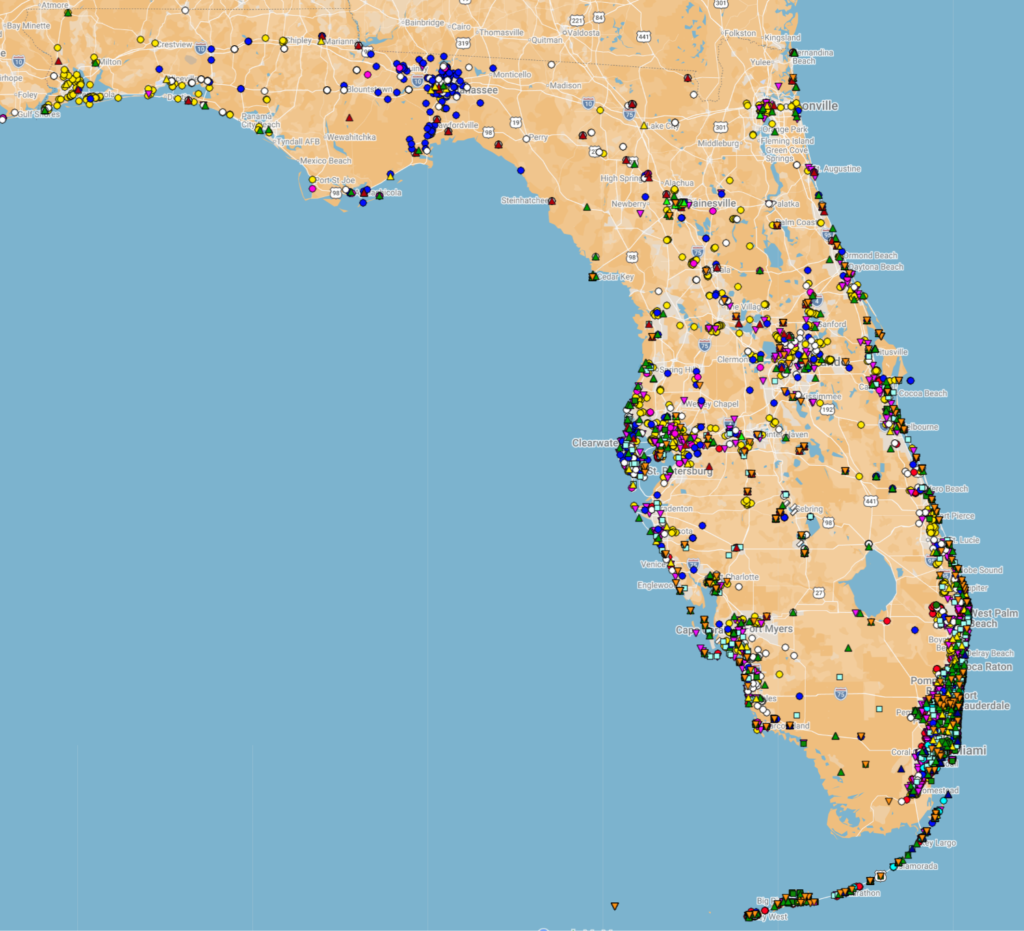
The University of Florida termite lab just updated its Florida termite map, and if you live anywhere along our stretch of the Gulf Coast, it’s worth a look. The lab added more than 800 new data points over the past year, bringing the map to over 9,000 confirmed termite records statewide.
We spend a lot of time in attics, garages, and crawlspaces around Sarasota, Bradenton, Venice, and North Port, so we’re always paying attention to what termites are up to. Here’s what the new map tells us, and what it means for your home.
Meet the three termites doing most of the damage
Florida has 20 known termite species, and the map tracks all of them. But most of the records come down to three invasive pests:
- Formosan subterranean termite. These guys live in massive colonies and are known for being aggressive eaters. They usually start in the soil, but given enough moisture they can set up shop inside walls or roofs without ever touching the ground.
- Asian subterranean termite. Closely related to the Formosan and just as destructive. It’s been working its way out of South Florida and into more communities over the years.
- West Indian drywood termite. This one doesn’t need soil at all. It lives right inside dry wood like framing, trim, and furniture. The usual giveaway is little piles of pellets (droppings) that look like sand or coffee grounds.
The map also shows where native subterranean termites, dampwood termites, and a few drywood species that aren’t considered pests have turned up.
What the map shows for Southwest Florida
Zoom in on our area and you’ll notice something right away: the records hug the coast. There are clusters of termite finds through Bradenton, Sarasota, Venice, and Englewood, more around Charlotte Harbor, and a heavy concentration down through Cape Coral and Fort Myers.
That lines up with what we see in the field. Coastal Florida gives termites everything they love: warm weather year round, humidity, and a lot of homes packed close together. And since invasive species keep spreading into new communities, a neighborhood that looks quiet on the map today might not stay that way.
Why this matters when you’re buying (or already own) a home
Here in Florida, the question usually isn’t whether termites are around. It’s whether they’ve found your house yet. Termite damage can hide behind drywall, under flooring, and inside framing for years before anyone notices, and repairs can get expensive fast.
If you’re buying, a WDO (wood-destroying organism) inspection should be on your list, and some lenders require one. During a home inspection, we also keep an eye out for the conditions that invite termites in, like moisture problems, wood touching soil, mulch piled against the foundation, and damaged or soft wood.
If you already own your home, the new map is a good nudge to check that your termite protection is current and that you know what kind of treatment or bond you actually have.
Signs to watch for around the house
You don’t need to be an expert to catch the early clues. Keep an eye out for:
- Swarmers. Winged termites flying around lights or windows, especially on warm evenings in spring.
- Discarded wings. Small piles of wings on windowsills, floors, or in spider webs.
- Mud tubes. Thin, pencil-sized dirt tunnels running up your foundation, slab edge, or garage walls.
- Pellets. Tiny piles of sand-like droppings under trim, cabinets, or furniture, a classic drywood sign.
- Damaged wood. Wood that sounds hollow when you tap it, or paint that bubbles or blisters for no obvious reason.
Spot something? Don’t spray it and sweep it away. Grab a photo or a sample and call a licensed pest control company so they can identify it and recommend the right treatment.
Check the map yourself
The map is free to explore, and you can even pull it into the Google Maps app on your phone. It exists thanks to a team effort between the pest control industry and UF, since most of the data from the past decade came through the lab’s free termite ID service. Tracking where these invasive species pop up helps protect the communities most at risk.
- Florida termite distribution map (works as a Google Maps layer)
- How to send a termite sample to UF
Know what you’re buying
Termites are just part of life in Florida, but surprises don’t have to be. Whether you’re buying your first home, selling, or just want peace of mind about the one you’re in, the team at Hope Home Inspections will help you understand exactly what’s going on with your property.
We proudly serve Sarasota, Bradenton, Lakewood Ranch, Venice, North Port, and the surrounding areas. Give us a call or book online, and let’s take a look together.